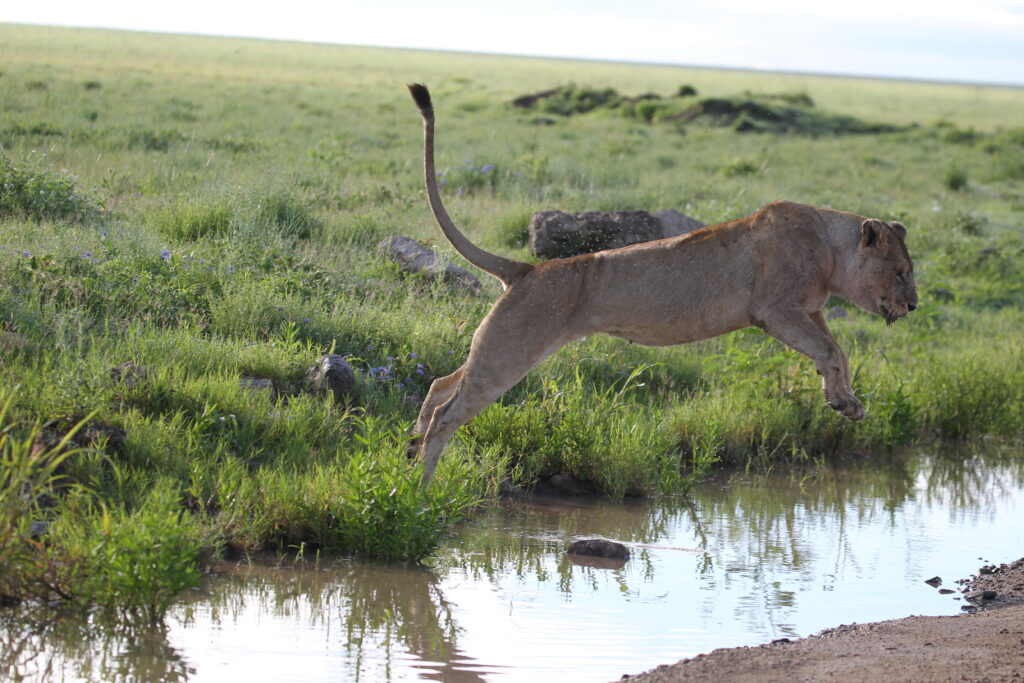
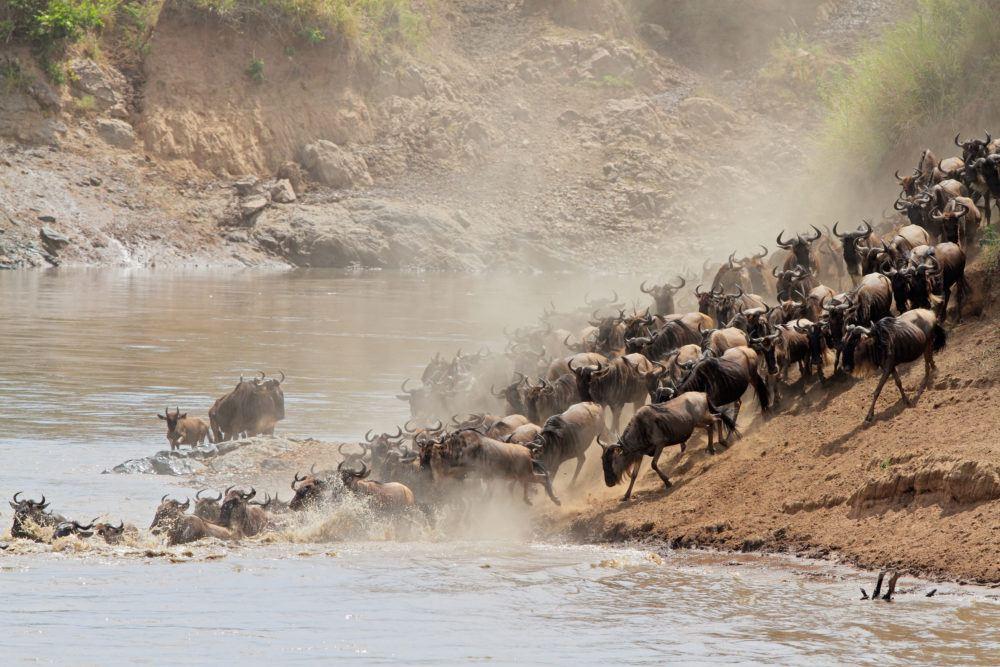
The single activity that defines a stay here is a privately guided Great Migration experience, tailored to whichever phase of the migration the camp’s current seasonal position puts guests closest to.
Game Drives
Morning and afternoon game drives run in comfortable 4×4 vehicles equipped with an on-board safe and charging points, led by professionally trained guides who specialize in reading whichever migration phase is currently underway, calving behavior, and predator activity at Ndutu, river-crossing anticipation at Grumeti and Kogatende, or resident big-cat tracking during the transitional Seronera stints. Because each campsite is genuinely private and exclusive-use, drives regularly begin and end without encountering another operator’s vehicle at the actual camp, even if sightings themselves are naturally shared with other vehicles at busy crossing points.
Hot Air Ballooning and Day Trips

A sunrise hot air balloon flight is available, typically at extra cost, and pairs naturally with whichever landscape the camp currently overlooks: explore our dedicated guide to hot air balloon safaris in the Serengeti, which explains what to expect. When the camp is positioned in its southern Ndutu season, day trips to Olduvai Gorge and the otherworldly dunes of Shifting Sands are available seasonally, giving guests a change of pace from game driving without leaving the broader itinerary.
Stargazing and Bush Dining.
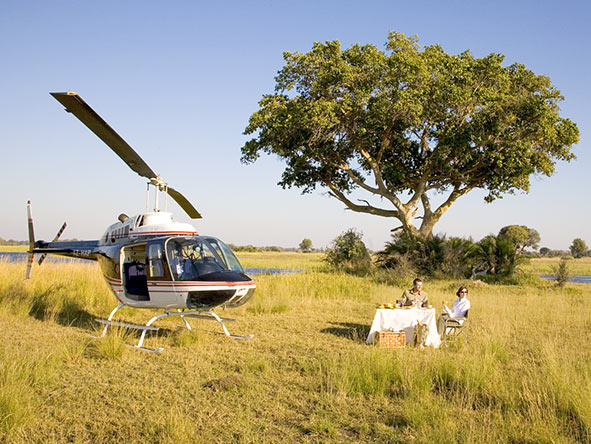
Stargazing is a genuine highlight rather than an afterthought here, given how far most seasonal campsites sit from any source of light pollution; campfire evenings routinely include informal astronomy alongside the usual recap of the day’s sightings. Bush dining, whether a full meal or a simple sundowner setup, takes advantage of the fact that the crew can set up virtually anywhere within reach of camp, so the setting changes as often as guests want it to.
Wildlife Visitors Can Expect
What guests see depends heavily on where the camp sits that month, which is precisely the point: expect the wildebeest calving season and its accompanying predator activity at Ndutu, dramatic crocodile-filled crossings of the Grumeti and Mara rivers at the western and northern positions, respectively, and strong resident game lions, leopards, elephants, and buffalo, among them at every position in between. The wider ecosystem also supports healthy populations of topi, kongoni, and Thomson’s gazelle, along with exceptional big-cat sightings and prolific birdlife throughout the year. During the Great Migration proper, over two million wildebeest, zebra, and gazelle move through the areas the camp is specifically positioned to intercept.
Who Should Stay at &Beyond Serengeti Under Canvas?
&Beyond Serengeti Under Canvas, it suits honeymooners, families with children six and older, photographers, and serious migration-focused travelers particularly well, thanks to its exclusive-use campsites, confirmed family policy, and a structural advantage of genuine seasonal repositioning that no fixed lodge can replicate.
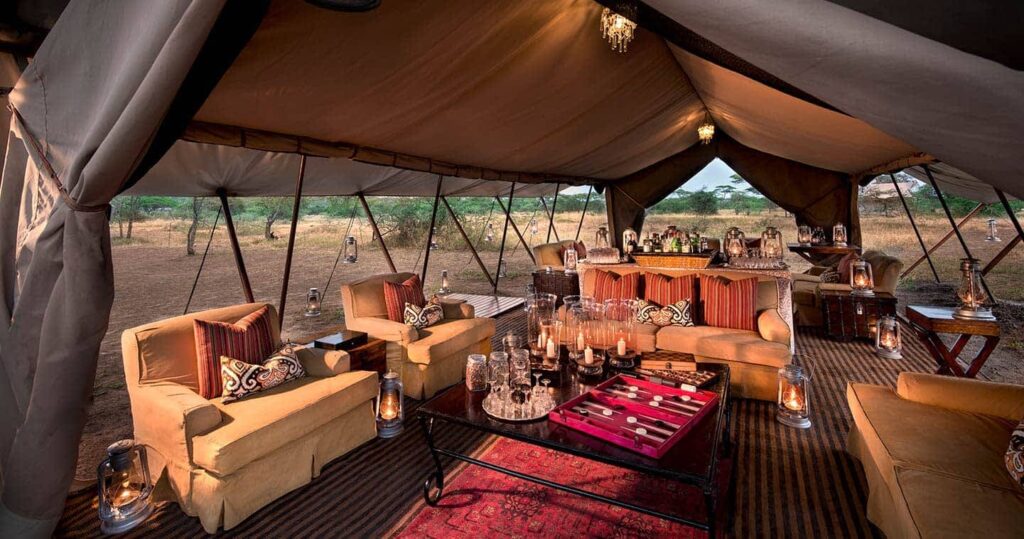
&Beyond Serengeti Under Canvas Camps
Honeymoon & Romantic Couples
The combination of an exclusive-use campsite, formally served candlelit dinners, and a genuinely old-fashioned safari-camping atmosphere makes the experience a distinctive honeymoon choice for couples who want the romance of classic 1920s-style safari travel without sacrificing crystal glassware and a private butler.
Families With Children
The confirmed minimum age of six, a dedicated family tent at each campsite, the WILDchild programme’s hands-on bush-skills activities, and the option of a private vehicle for flexible game-drive timing make the experience a genuinely well-thought-out choice for families, provided children meet the age requirement.
Solo Travelers
The intimate, nine-tent scale of each campsite and the shared dining and lounge tent naturally encourage conversation among guests, making this a comfortable choice for solo travelers who want company at mealtimes without being locked into a rigid group schedule during the day.
Wildlife Photographers
The camp’s structural advantage is enormous for photographers specifically: rather than hoping the migration happens to be nearby during a fixed stay, guests can choose which seasonal position to book Ndutu for calving-season predator action, Grumeti, or Kogatende for river crossings and know in advance roughly what the camp’s location will put them closest to.
First-Time Safari Travelers vs. Repeat Africa Visitors
First-time visitors get a genuinely classic safari experience here, closer in spirit to the earliest days of Serengeti tourism than almost any fixed lodge can offer, though the mobile model rewards a little extra research into which seasonal position best matches what they most want to see. Repeat Africa visitors tend to appreciate the camp precisely for that flexibility, using its seasonal movements to target a specific phase of the migration they have not yet experienced.
Is it Worth the Price?
At roughly US$900 to US$1,880-plus per person per night, depending on the season and camp location, &Beyond Serengeti Under Canvas sits at a genuinely premium price point, reflecting both the &Beyond brand and the logistics of running an exclusive-use mobile operation. Given the guaranteed exclusivity of each campsite, the structural advantage of always being positioned with the migration, and the classic-safari experience that few properties can authentically replicate, most travelers whose primary goal is the migration itself find the rate justified relative to fixed lodges that can only promise proximity to the herds for part of the year.
Best Time to Visit &Beyond Serengeti Under Canvas
There is no single best month to visit &Beyond Serengeti Under Canvas by design; the camp relocates specifically so that any time of year puts guests near a different phase of the Great Migration, from calving season to river crossings.

| Months |
Camp Location & Wildlife Highlights |
Crowds & Pricing |
| Late Dec – Early April |
Ndutu (southern Serengeti): wildebeest calving season, with hundreds of thousands of calves born and exceptional predator activity |
Moderate to high crowds around peak calving; seasonal pricing |
| Mid-April – May |
Seronera (central Serengeti): long rains, lush green landscape, strong resident game as herds move west |
Lowest crowds; lower rates |
| June – Mid-July |
Grumeti (western corridor): dramatic river crossings as herds cross the crocodile-inhabited Grumeti River |
Rising demand; rates increasing |
| Late July – Early Nov |
Kogatende (northern Serengeti): the famous Mara River crossings, with herds crossing back and forth between Tanzania and Kenya |
High season; peak crowds and rates |
| Nov – Mid-December |
Seronera (central Serengeti): herds move south again, and resident game remains strong. |
Shoulder season; moderate rates |
Because the camp’s entire premise is repositioning with the migration, there genuinely is no weak month to visit. The more useful question for planning is which specific phase of the migration matters most to you, since that determines which seasonal position of the camp best fits your dates.
Conservation & Community at &Beyond Serengeti Under Canvas
&Beyond Serengeti Under Canvas operates entirely within Serengeti National Park, a protected UNESCO World Heritage Site since 1981, using a mobile, low-footprint model that leaves no permanent structure behind at any of its seasonal sites.

What the Camp Does for Conservation
The mobile format is itself a meaningful conservation choice: each campsite is dismantled and the land left to recover once the camp moves on to its next seasonal position, in contrast to the permanent infrastructure that fixed lodges necessarily leave in place year-round. &Beyond’s company-wide model directly conserves roughly one million acres of habitat across its portfolio, built around its founding Care of the Land, Care of the Wildlife, and Care of the People ethos, with company-wide targets covering carbon footprint reduction and sustainable resource use. &Beyond Serengeti Under Canvas holds Preferred Hotels & Resorts membership recognition, reflecting its standing among the company’s broader sustainability and service commitments.
Community Employment and Education
&Beyond’s community development work runs through Wild Impact (formerly Africa Foundation), the company’s long-standing development partner, which channels tourism revenue into education, healthcare, and small-business development in communities near its Tanzania properties.
Why Staying Here Is a Considered Choice
Choosing a mobile camp that leaves no permanent trace at any single site is a genuinely lower-impact way to experience the Serengeti across multiple seasons, and &Beyond’s broader Care of the Land, Care of the Wildlife, Care of the People model gives a stay here a more direct line to conservation outcomes than a permanent structure occupying the same ground year-round.
Planning Your Stay: Practical Travel Tips
A stay at &Beyond Serengeti Under Canvas calls for the same practical preparation as any Serengeti safari, with the added consideration that packing and expectations should be tailored to whichever seasonal position the camp currently occupies.
What to Pack
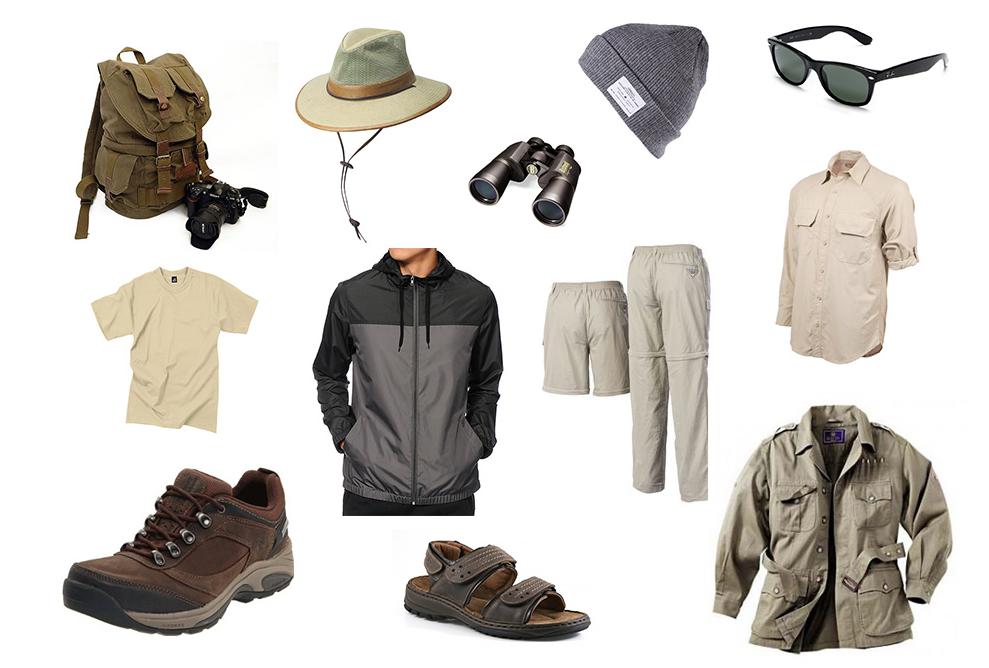
Conditions vary meaningfully by season and camp position: cooler and often wet during the April-to-May Seronera stint, dry and dusty during the June Grumeti crossing, and warm with cool mornings during the Kogatende dry season, so check current conditions for your specific travel dates and pack accordingly: breathable, neutral-toned layers (khaki, olive, and tan), a warm layer for early-morning game drives regardless of season, a wide-brimmed hat, sunglasses, and high-SPF sunscreen. Comfortable closed shoes are useful for camp itself, given the classic tented-camp setup, along with binoculars (the camp also provides a pair of SWAROVSKI OPTIK binoculars per room), a camera with a reasonable zoom lens, and a light rain jacket if traveling during the Seronera green-season stint. Bush flights carry strict soft-bag luggage limits, so pack in a duffel rather than a hard-shell case.
Health and Vaccination Notes
The Serengeti sits within a malaria zone regardless of which seasonal position the camp currently occupies, so consult a physician or travel clinic about antimalarial medication before departure, and pack insect repellent for evenings around camp. Tanzania requires proof of yellow fever vaccination for travelers arriving from at-risk countries; always verify current entry requirements with a travel clinic or Tanzanian embassy ahead of the trip, since these rules can change. Comprehensive travel insurance, including medical evacuation coverage, is strongly recommended for any remote safari location, and emergency evacuation insurance is typically already included in the camp’s standard rate.
Payment, Tipping, and What’s Included
Standard rates typically include accommodation, three meals daily, soft drinks, house wines, local-brand spirits and beers, teas and coffees, refreshments on activities, game drives, laundry, and transfers between the current airstrip and camp; hot air balloon flights and premium-label drinks are usually charged separately. Tipping is customary in Tanzania’s safari industry and is typically given in cash (US dollars are widely accepted), with guides and camp staff tipped separately; for current guideline amounts, ask Luxury Safaris Tanzania, as expectations vary by group size and length of stay.
How to Combine With Other Parks
Because the camp’s own position already shifts across the Serengeti’s south, center, west, and north over the course of a year, most guests combine a single seasonal stay with Ngorongoro Conservation Area or Tarangire National Park before or after, rather than trying to chase multiple migration phases within one trip. Travelers wanting to extend further can add a few days on Zanzibar at the end of the safari or combine it with Kilimanjaro trekking beforehand. Our Combined Safaris page outlines several ways to link these destinations into a single seamless itinerary.
Want help timing a stay to the right migration phase?
Start Planning With Our Experts →
Frequently Asked Questions About &Beyond Serengeti Under Canvas.
Where exactly is &Beyond Serengeti Under Canvas located?
&Beyond Serengeti Under Canvas does not have a single fixed location; it is a mobile camp that relocates up to five times a year within Serengeti National Park, moving among the Ndutu, Seronera, Grumeti, and Kogatende areas to stay positioned with the Great Migration throughout its annual cycle.
How many tents does &Beyond Serengeti Under Canvas have?
Each of the two parallel Serengeti Under Canvas campsites offers nine tents, including one dedicated family tent. Every tent includes a private indoor sitting area, an en-suite bathroom, and his-and-hers outdoor bucket showers.
What is the nearest airstrip to &Beyond Serengeti Under Canvas?
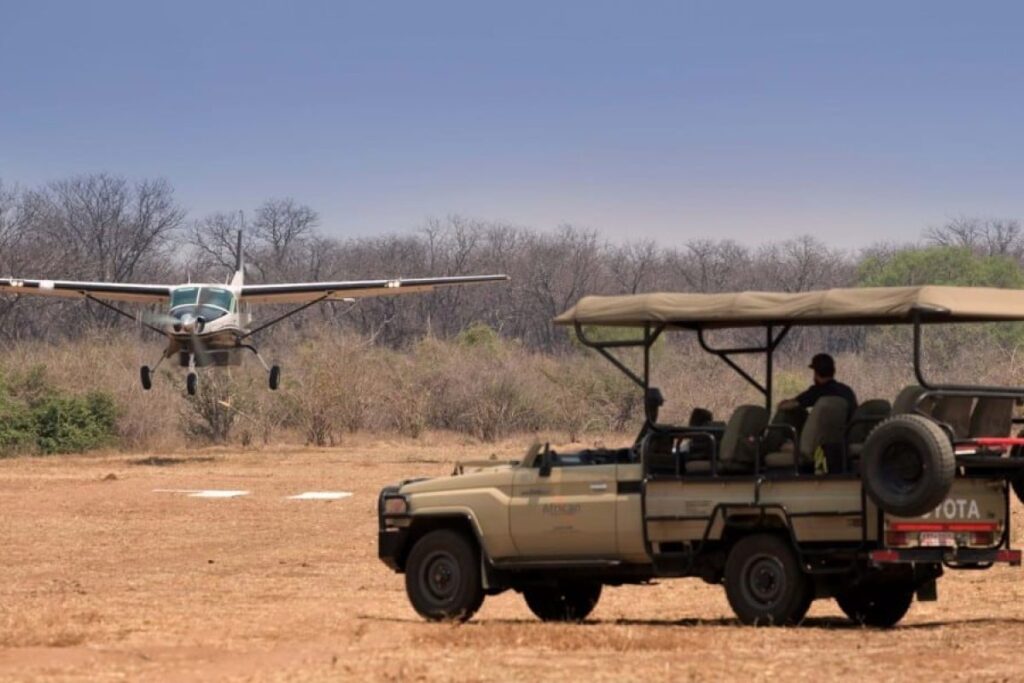
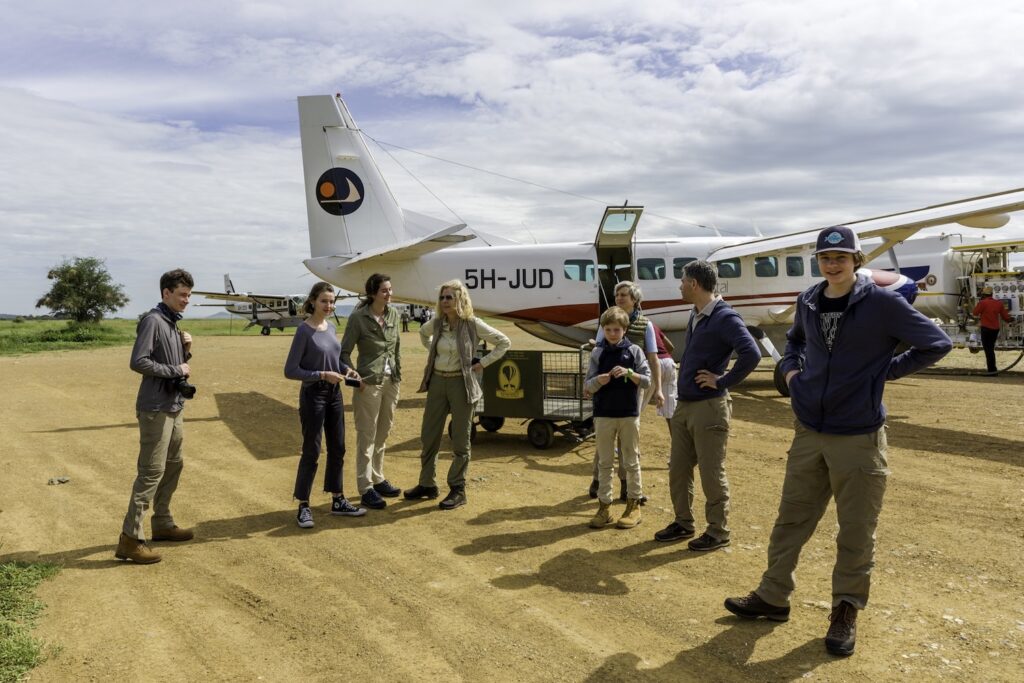
The nearest airstrip depends entirely on the camp’s current seasonal position: Ndutu, Seronera, Grumeti, or Kogatende Airstrip. Scheduled flights connect Arusha Airport to whichever airstrip is currently in use, with flight times of roughly 1 to 1.5 hours.
When is the best time to see the wildebeest migration from &Beyond Serengeti Under Canvas?
There is no single best month, since the camp itself relocates to stay with the migration: it sits at Ndutu for the calving season from roughly late December to early April, moves to Grumeti for the western corridor crossing in June, and repositions to Kogatende for the Mara River crossings from late July to early November.
Is &Beyond Serengeti Under Canvas good for families with children?
Yes, the camp’s confirmed minimum age policy is for families with children aged six and older. Each campsite includes a dedicated family tent, the &Beyond WILDchild programme offers hands-on activities for younger guests, and families have access to a private vehicle for flexible game-drive timing.
Does &Beyond Serengeti Under Canvas have Wi-Fi?
Yes. Wi-Fi access and power outlets are available in every tent, a detail many guests do not expect from a mobile camp positioned so remotely, though signal quality can vary by seasonal location.
What is included in the room rate at &Beyond Serengeti Under Canvas?
Standard rates typically include accommodation, three meals daily, soft drinks, house wines, local-brand spirits and beers, teas and coffees, refreshments during activities, game drives, laundry, and transfers between the current airstrip and camp. Hot air balloon flights and premium-label drinks are usually charged separately; confirm exact inclusions for your rate category when booking.
Is &Beyond Serengeti Under Canvas ideal for a honeymoon?
Yes. Each exclusive-use campsite offers a genuinely romantic, old-fashioned safari-camping atmosphere with formally served candlelit dinners, a private butler, and crystal glassware, appealing to couples who want classic safari romance without sacrificing luxury service.
What animals can I expect to see at &Beyond Serengeti Under Canvas?
What you see depends on the camp’s seasonal position: expect wildebeest calving and predator activity at Ndutu, dramatic river crossings at Grumeti and Kogatende, and strong resident lion, leopard, elephant, and buffalo populations throughout the year, alongside topi, kongoni, and Thomson’s gazelle.
How do I get to &Beyond Serengeti Under Canvas from Kilimanjaro or Arusha?
Most guests fly from Arusha Airport to whichever seasonal airstrip is currently in use at Ndutu, Seronera, Grumeti, or Kogatende, a flight of roughly 1 to 1.5 hours, followed by a complimentary road transfer into camp. Travelers arriving via Kilimanjaro International Airport typically connect through Arusha for the onward bush flight. A direct road transfer from Arusha is possible but takes roughly 8 to 10 hours over rough terrain and is rarely used.
Is &Beyond Serengeti Under Canvas all-inclusive?
Rates are full-board and include most beverages, game drives, and airstrip transfers, but exclude hot air balloon flights and premium-label drinks by default. Please confirm what is and is not covered for your specific rate category before booking.
Can I combine &Beyond Serengeti Under Canvas with other parks in Tanzania?
Yes. Most guests combine a single seasonal stay with Ngorongoro Conservation Area or Tarangire National Park before or after, and many trips extend afterward to Zanzibar’s beaches or combine with a Kilimanjaro trek.
How often does &Beyond Serengeti Under Canvas move locations?
The camp relocates up to five times a year, following a broad seasonal pattern between Ndutu, Seronera, Grumeti, and Kogatende, though exact transition dates shift slightly year to year based on the migration’s actual movements and campsite allocations from park authorities.
Who operates &Beyond Serengeti Under Canvas?
A: The camp is owned and operated by &Beyond, a company founded in 1991 around its Care of the Land, Care of the Wildlife, and Care of the People ethos, with 29 lodges and camps across three continents and a long-standing community development partnership through Wild Impact.
Is there a private vehicle for game drives at &Beyond Serengeti Under Canvas?
Yes, particularly for families, who are provided access to a private vehicle so daily game-drive timing can be built around the group rather than a shared camp schedule.